DeFi Explained: Stunning Guide to the Best Benefits
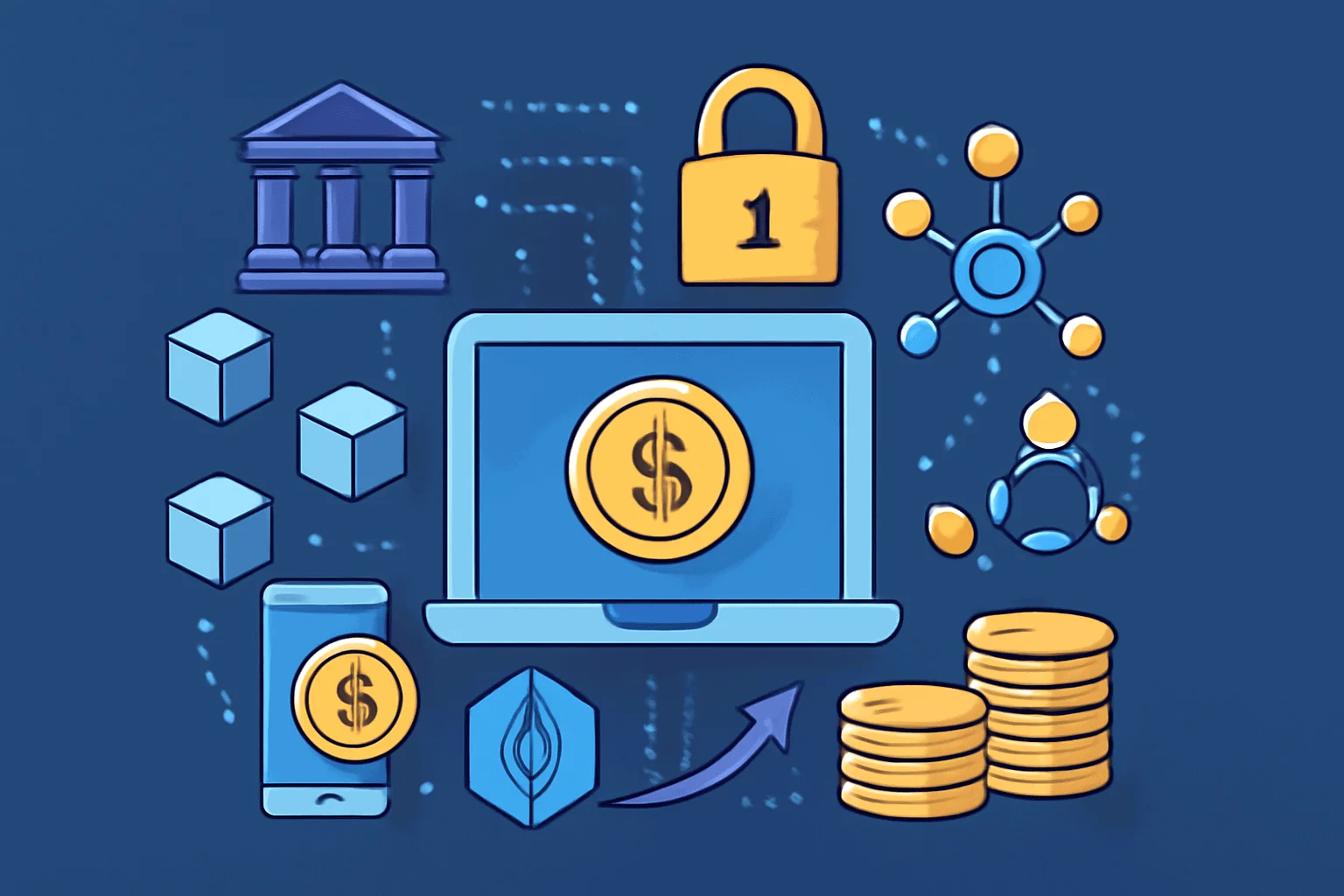

At its core, DeFi replaces institutions with smart contracts—self-executing programs that move funds based on predefined logic. If a loan is undercollateralized, the contract liquidates it. If a trade meets price conditions, it fills. No phone calls, no middle desks, no “we’ll get back to you.”
How DeFi Works in Practice
Most DeFi activity happens on chains that support smart contracts, such as Ethereum, but also networks like Solana, Arbitrum, Base, and BNB Chain. Users connect wallets (e.g., MetaMask, Phantom) to applications hosted on these networks. From there, they can trade, borrow, lend, or provide liquidity.
Picture this: Alice deposits $2,000 in stablecoins into a lending protocol. The smart contract records her deposit and pays variable interest funded by borrowers. Bob, who wants to borrow, locks up $3,000 worth of ETH as collateral and takes a $1,500 stablecoin loan. If ETH drops too far, the contract sells part of Bob’s collateral to keep the system solvent. No banker intervenes; the code does.
Core Building Blocks
DeFi isn’t one app. It’s a set of primitives that interlock like Lego bricks. Understanding these blocks helps you navigate safely.
- Automated market makers (AMMs): Protocols like Uniswap or Curve set prices using liquidity pools and formulas instead of order books.
- Lending markets: Aave and Compound let users earn interest on deposits and borrow against collateral, with on-chain liquidation rules.
- Stablecoins: Tokens pegged to a fiat currency, often USD. Examples include USDC (backed by reserves) and DAI (crypto-collateralized).
- Derivatives: On-chain perpetual futures and options mirror exchange products but settle via smart contracts.
- Bridges: Infrastructure to move assets across chains. Useful, but a common breach point.
Each primitive is composable. A trading strategy might borrow a stablecoin from Aave, swap on an AMM, and farm rewards elsewhere—all in a single transaction batch.
Why DeFi Matters
Traditional finance is bound by cut-off times, geographic barriers, and intermediaries. DeFi offers a different model: anyone with an internet connection and a wallet can access global liquidity.
Key benefits include custody, transparency, and programmability. You can hold your own keys, inspect smart contract code, and build automated strategies. Settlement is near-instant for many chains, and markets run continuously.
Risks You Can’t Ignore
DeFi introduces new hazards. Protocols can fail not just economically but technically. A carefully designed plan beats blind optimism.
- Smart contract bugs: A single arithmetic error can drain a pool. Audits help, not guarantee.
- Economic exploits: Manipulating on-chain prices or incentives can break assumptions, as with flash loan attacks.
- Oracle risk: If price feeds are wrong or delayed, liquidations and trades misfire.
- Key management: Lose your seed phrase and funds are gone. Phishing is rampant.
- Regulatory shifts: Stablecoin rules, KYC requirements, or exchange crackdowns can affect access and liquidity.
Build a safety routine: test with small amounts, favor battle-tested protocols, enable hardware wallets, and watch for abnormal fee spikes or paused contracts before committing funds.
Common Use Cases
DeFi isn’t only for speculators. Several practical activities have matured and serve different needs, from savings to market-making.
- Earning yield: Deposit stablecoins in a lending protocol to earn variable interest; returns move with borrowing demand.
- Swapping tokens: Trade assets on AMMs without an account or centralized custody.
- Collateralized borrowing: Unlock liquidity without selling long-term holdings by borrowing against them.
- Cross-chain transfers: Move value between ecosystems to chase lower fees or specific applications.
- On-chain hedging: Use perps or options to offset exposure during volatile periods.
For example, a small studio that gets paid in ETH can park a portion in a stablecoin yield vault to cover payroll while hedging downside with a small short on a decentralized perpetuals exchange.
Gas Fees, Throughput, and Layer 2s
Each transaction on a blockchain requires a fee. When networks congest, fees spike and small trades become uneconomical. Layer 2s (L2s) help by bundling transactions and settling them on a base chain, cutting costs and increasing throughput.
Rollups—Optimistic (e.g., Optimism, Arbitrum) and Zero-Knowledge (e.g., zkSync, Starknet)—dominate the L2 landscape. They differ in how they prove transaction validity, but the end result is cheaper, faster transactions secured by the underlying chain.
Custody and Wallet Basics
Wallets are your gateway to DeFi. A browser extension wallet is easy to start with, but a hardware wallet greatly reduces theft risk. Seed phrases must be stored offline and never typed into websites or sent via chat.
Set spending caps when approving tokens. Many hacks drain wallets through unlimited allowances granted months earlier. Revoke old approvals using a reputable token approval tool when you rotate strategies.
Tokenomics and Incentives
Token design shapes behavior. Liquidity mining can jumpstart bootstrapping but may attract mercenary capital that flees when rewards shrink. Sustainable protocols align incentives of users, liquidity providers, and token holders.
Read emissions schedules, vesting terms, and revenue-sharing mechanisms. A protocol that collects trading fees and routes them to a treasury with transparent governance often has steadier footing than one reliant solely on inflationary rewards.
Security Signals to Watch
You can’t eliminate risk, but you can stack odds in your favor by scanning a few signals before interacting with a protocol.
| Signal | What to Look For | Why It Matters |
|---|---|---|
| Audits | Reputable firms, dates, and remediation reports | Shows issues were found and fixed, not ignored |
| Bug bounties | Active bounty program with clear reward tiers | Incentivizes white-hat disclosures over exploits |
| TVL stability | Gradual growth, no sudden unexplained spikes | Anomalies can hint at manipulative behavior |
| Governance | Transparent proposals, vote histories, multisig signers | Reduces opaque admin key risk |
| Oracle design | Battle-tested oracles; guarded pricing for thin markets | Limits price manipulation and cascade liquidations |
Even with green flags, size positions appropriately. If a bug emerges, on-chain losses settle instantly with no chargebacks or helplines.
How DeFi Differs from TradFi
Both systems aim to match capital with opportunity, but they do it differently. DeFi abstracts trust into code and math, while TradFi relies on legal contracts, regulators, and intermediaries.
- Access: DeFi is open by default; TradFi requires accounts, checks, and local infrastructure.
- Settlement: On-chain finality in minutes vs. multi-day clearing windows.
- Transparency: Positions and reserves are visible on-chain; bank balance sheets are periodic and opaque.
- Custody: Users hold keys in DeFi; institutions hold assets in TradFi.
- Resilience: DeFi faces code risk; TradFi faces counterparty and operational risk.
The trade-off is stark: in DeFi, you gain control and speed but shoulder technical risk. In TradFi, you outsource risk management but accept gatekeepers and delays.
Getting Started Safely
A cautious first step beats a reckless leap. Start with low-volatility assets and learn the tooling before experimenting with leverage or illiquid pools.
- Set up a wallet and back up the seed phrase offline. Add a hardware wallet once you move beyond testing.
- Bridge or buy a small amount of stablecoins and the chain’s native token for gas.
- Test a swap on a major AMM. Note fees and slippage.
- Deposit a minor amount into a lending protocol; monitor variable APY and collateral factors.
- Revoke old approvals and review portfolio exposures weekly.
Treat every new protocol like a beta release until you verify its track record. On-chain transparency is your friend—use block explorers and analytics dashboards to confirm what the interface claims.
Where DeFi Is Heading
Trends point to deeper integration with real-world assets, improved user experience through account abstraction, and stronger security via formal verification and modular architectures. L2 ecosystems are maturing, reducing costs and widening the design space for consumer-grade apps.
Expect clearer regulation around stablecoins and on-ramps. As legal rails solidify, institutions will tap on-chain liquidity for settlement and collateral, while retail users get simpler, safer interfaces that hide the plumbing without sacrificing self-custody.
Final Notes
DeFi reimagines finance as open-source infrastructure. It’s fast, transparent, and unforgiving. Learn the primitives, respect the risks, and let small experiments build your playbook. With prudence, it can become a useful part of a modern financial toolkit.