
Delegated Proof of Stake Explained: Stunning, Best Guide

How DPoS Works, Step by Step
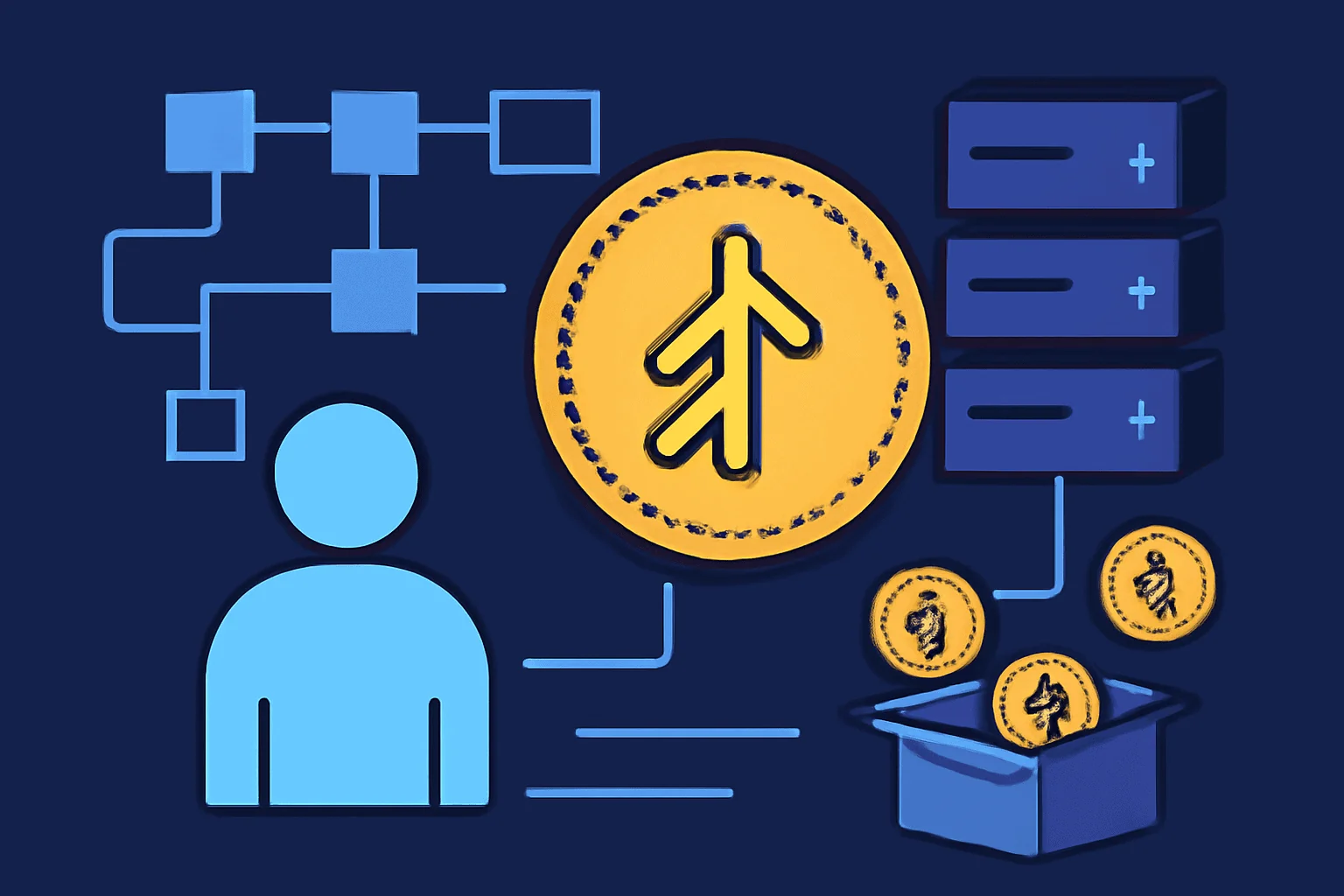
While implementations differ across networks, most DPoS systems follow a familiar rhythm. The process ties together stake, voting, block production, and rewards in a tight loop.
- Token holders stake or lock their tokens to gain voting power.
- They vote for a limited number of validators (e.g., top 21) who will produce blocks for the next round.
- Validators take turns producing blocks in fixed time slots, following a schedule.
- Rewards from block production get distributed to validators and, typically, shared with voters according to set rules.
- If a validator misses blocks or behaves badly, voters can withdraw support and elect someone else in the next round.
Picture a user with 10,000 tokens who delegates votes to three validators promising transparent reward sharing and published uptime metrics. If one validator starts missing slots, the user can reassign votes within minutes, nudging the network toward reliable operators.
Why DPoS Exists
Proof of Work is secure but slow and energy-heavy. Classic Proof of Stake improves efficiency but can still involve hundreds or thousands of validators broadcasting messages, which adds latency. DPoS narrows the active set to a small, elected group. Fewer communicators means faster consensus and quicker finality, which benefits applications like exchanges, gaming, and social networks that need rapid settlement.
Core Features That Define DPoS
Most DPoS networks share several design choices aimed at speed, governance, and simplicity.
- Elective validator set: Token-weighted voting selects block producers for fixed intervals.
- Round-robin scheduling: A deterministic order lowers orphaned blocks and coordination overhead.
- Slashing or replacement by vote: Misbehavior or poor performance can lead to penalty or swift removal.
- Reward sharing: Validators distribute a portion of block rewards to supporters; rates and terms are public.
- On-chain governance: Protocol changes can be proposed and decided through the same voting mechanisms.
These choices trade broad validator participation for predictability and throughput. The result is a network that can confirm blocks in seconds with high uptime, provided the validator set stays diverse and accountable.
DPoS vs. Other Consensus Mechanisms
Comparing consensus mechanisms clarifies where DPoS fits. The table below captures typical differences, though specifics vary by chain.
| Mechanism | Validator Count | Performance | Energy Use | Game-Theory Guardrails |
|---|---|---|---|---|
| Proof of Work (PoW) | Open, many miners | Lower throughput, high latency | High | Costly mining deters attacks |
| Proof of Stake (PoS) | Hundreds–thousands | Moderate–high throughput | Low | Slashing + large validator set |
| Delegated PoS (DPoS) | Dozens (e.g., 21–100) | High throughput, fast finality | Low | Voting plus social accountability |
DPoS leans on active governance and social signaling—uptime dashboards, public disclosures, and community scrutiny—more than PoW or some PoS designs. That cultural layer matters: voters must care, or centralization creeps in.
Benefits That Draw Projects to DPoS
Networks adopt DPoS when they want speed, a streamlined validator set, and agile governance. The upside is tangible for user-facing apps.
- Fast blocks and finality: Fixed schedules reduce uncertainty; blocks confirm in seconds.
- Lower hardware demands: Only a small group needs top-tier infrastructure.
- Continuous accountability: Validators live or die by voter confidence and transparent metrics.
- Upgrade agility: On-chain voting can push protocol changes without months of off-chain coordination.
For example, a social app posting millions of micro-transactions daily benefits from predictable one- to two-second block times, while users still retain a voice through token voting.
Risks and Critiques You Should Weigh
DPoS is not a free lunch. The model compresses decision-making into fewer hands, and that opens the door to new attack surfaces and governance pitfalls.
- Centralization pressure: Large token holders can shape the validator set; vote-buying and alliances can entrench incumbents.
- Cartels and collusion: Small groups may coordinate on fees or censorship unless disincentivized.
- Voter apathy: Low turnout lets whales dominate elections; reward-only voting dulls security signals.
- Short-termism: Validators might prioritize high reward payouts over long-term network health.
One common pattern: a validator boosts voter rewards to climb the rankings, then cuts infrastructure spend, leading to missed blocks. Without vigilant voters, that behavior persists longer than it should.
Design Variations Across DPoS Networks
Projects tweak parameters to manage trade-offs. You’ll see differences in election cadence, slashing severity, and vote mechanics.
- Voting model: Some chains use direct voting; others use stake delegation to pools or proxies.
- Validator seats: Fixed counts (e.g., 21) versus dynamic sets based on performance thresholds.
- Reward policy: Flat rewards, performance-weighted payouts, or progressive sharing with voters.
- Penalties: From soft replacement to hard slashing for double-signing or downtime.
- Governance scope: Parameter tweaks only, or full on-chain constitutional changes.
These levers shape network culture. Strict slashing and frequent elections push reliability; generous voter rewards increase participation but may attract mercenary voting.
Security in Practice: Where DPoS Holds and Where It Bends
DPoS can be resilient if social and economic incentives align. Strong monitoring, transparent telemetry, and credible penalties deter misbehavior. Yet the small validator set makes censorship less costly to attempt. Resilience rests on rapid voter response and credible forensics to prove faults.
Two stress scenarios are worth noting. First, coordinated downtime among a few top validators can stall blocks; redundancy and geographic dispersion mitigate that. Second, a governance capture—where a coalition controls both code upgrades and block production—can push through self-serving changes unless constitutional checks exist.
How to Participate Safely as a Voter
Voting well improves network health and your rewards. It’s not set-and-forget. A little diligence goes far.
- Check uptime and missed-block statistics over multiple epochs, not just last week.
- Read validator transparency reports: infrastructure, security practices, geographic diversity.
- Compare reward policies, but watch for unsustainably high promises.
- Diversify votes across several reliable validators to reduce correlated risk.
- Re-evaluate monthly; rotate out validators with rising downtime or opaque behavior.
A practical routine: schedule a calendar reminder, skim a validator dashboard for red flags, and update your votes in five minutes. That habit beats chasing the highest APR.
Examples of DPoS in the Wild
Historical and current networks illustrate the model’s range. EOS popularized a 21-producer schedule with rapid blocks and contentious governance debates. Tron adopted a similar producer set with high throughput for consumer apps. Lisk focused on JavaScript-based development with an elected delegate model. Newer chains blend DPoS ideas with modern PoS tooling, such as stake delegation and slashing.
The differences stand out in voting UX. Some ecosystems make delegation a one-click action inside wallets, while others require on-chain transactions with multiple steps. Simpler UX tends to raise voter turnout—and by extension, accountability.
When DPoS Makes Sense—and When It Doesn’t
DPoS fits applications that value fast confirmation, cheap computation, and active governance. It’s less suited to settings where censorship resistance must remain strong even under voter apathy or where regulatory pressure could concentrate votes. If your threat model anticipates nation-state adversaries or deep token concentration, consider broader-validator PoS or PoW designs.
Key Takeaways for Builders and Users
DPoS trades validator breadth for speed and governability. That trade can work well with vigilant communities and credible penalties. For users, voting diligence and diversification matter more than chasing top headline yields. For builders, transparent metrics and strong default governance—rate limits, slashing, and open telemetry—keep incentives pointed in the right direction.