DEX Aggregator Explained: Stunning Benefits and Best Picks

How DEX Aggregators Work
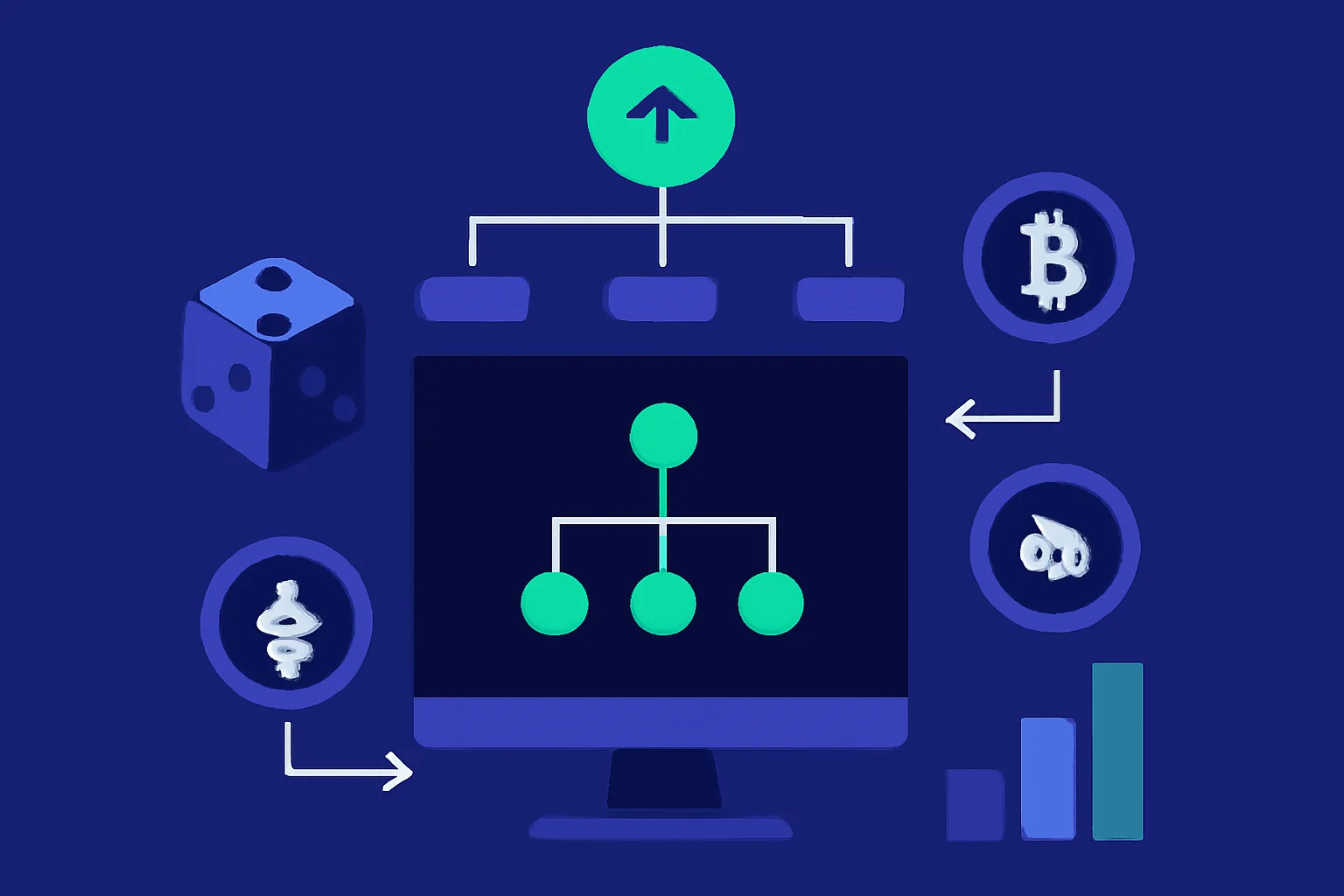
Under the hood, aggregators maintain up-to-the-block snapshots of liquidity across pools and chains. When you punch in a swap, they simulate thousands of routes, estimate price impact, add gas costs, then rank outcomes by net value received. If splitting the trade lowers slippage, they’ll route fragments to several pools and stitch them together in one transaction.
Two micro-scenarios show the point. Swapping a modest 500 USDC to ETH might route entirely through a deep Uniswap v3 pool. Swapping 250,000 USDC to ETH likely gets split across Uniswap, Curve, and Balancer to blunt price impact, saving thousands on slippage even after extra gas.
Why Traders Use Them
Aggregators remove the guesswork. Prices on DEXs move block by block, and liquidity fragments across pools and chains. A manual search wastes time and often lands worse execution. With an aggregator, you trade once and let the router optimize in the background.
- Better effective price: Lower slippage via multi-venue routing.
- Lower total cost: Considers pool fees and gas in the route choice.
- Broader token access: Surfaces niche pools you may never check.
- Fewer clicks: One approval, one swap, many venues.
For active users, shaving a few basis points per swap compounds into real money over a month.
Core Features You’ll See
Most leading aggregators converge on a familiar toolkit, though implementations differ.
- Multi-pool routing: Splits orders across several pools to minimize slippage.
- Gas-aware quotes: Shows net output after estimated gas on the selected chain.
- Slippage controls: Lets you set tolerance; some add dynamic protection during volatile blocks.
- Cross-chain support: Bridges and swaps in one flow via integrated bridges.
- MEV protection: Private relays to cut sandwich risk on compatible networks.
Good UIs also show route visualizations so you can see exactly where funds travel before you sign.
Behind the Scenes: Routing and Slippage
Aggregators model automated market maker (AMM) curves, pool fees, and depth. For constant-product pools like Uniswap v2, larger trades move the price against you. Concentrated-liquidity pools add complexity with price ranges. The router weighs these details and compares many permutations quickly.
An intuitive rule tends to hold: deeper pools and lower fees win for small trades; for large trades, splitting across multiple deep venues beats hammering a single pool. When gas prices spike, the optimal route may simplify to fewer hops to keep costs down.
Popular DEX Aggregators at a Glance
The market includes several battle-tested options. Each leans on different routing logic, supported chains, and extra features like limit orders or private order flow.
| Aggregator | Notable Strengths | Common Chains |
|---|---|---|
| 1inch | Advanced Pathfinder routing, RFQ liquidity, limit orders | Ethereum, BNB Chain, Polygon, Arbitrum, Optimism |
| Matcha (by 0x) | Clean UX, 0x RFQ market makers, gas-efficient routes | Ethereum, Polygon, BNB Chain, Base |
| Paraswap | Price discovery across AMMs, private market makers | Ethereum, Polygon, Avalanche, Arbitrum |
| OpenOcean | Wide multi-chain coverage, CEX quotes alongside DEX | Multi-chain incl. Ethereum, BNB Chain, Tron |
| Cow Swap | Batch auctions, MEV-resistance, intent-based matching | Ethereum, Gnosis Chain |
Choice often comes down to the chain you use and whether you value features like limit orders or private settlement over pure AMM splitting.
Fees, Gas, and Real Costs
Aggregators don’t print free money; they optimize net outcome. Your final result folds together pool fees, gas, and price impact. Some aggregators charge a small service fee, while others monetize through order flow or partner programs.
On a calm day, a two-hop route through a 0.05% fee pool can beat a one-hop 0.3% pool, even with slightly higher gas. During congestion, that extra hop can erase savings. Always read the breakdown on the quote screen; if the gas estimate looks steep, consider tightening slippage or waiting a few minutes.
Safety and Trust Considerations
You still sign transactions and grant token approvals. The aggregator’s smart contracts typically route funds and then return proceeds, but poor settings or malicious tokens can still bite.
- Verify contracts: Use official links; double-check token contract addresses.
- Review allowances: Approve only what you need or use “permit” where supported.
- Set sane slippage: 0.3–1% for majors; more for thin tokens if you accept risk.
- Prefer MEV protection: Private relays reduce sandwich attacks on supported chains.
If a quote looks too good, it likely relies on an illiquid or stale pool. Toggle alternative routes or lower slippage and re-quote.
Cross-Chain Aggregation
Many aggregators now combine bridges with swaps. You submit a source token on one chain and receive a different token on another. The router sequences swap → bridge → swap, aiming for best net result across both sides.
This is convenient but adds moving parts: bridge fees, extra gas, and settlement time. For sizable transfers, comparing a native bridge plus local swap against an “all-in-one” route can save money.
When a DEX Aggregator Shines
Not every trade needs heavy routing. Small, highly liquid swaps often do fine on a single DEX. Aggregators shine when one of these applies:
- Your size is large relative to pool depth and you want to minimize price impact.
- The token trades across many pools with uneven fees and liquidity.
- You need cross-chain settlement without juggling multiple apps.
A quick rule: if the aggregator shows a better net outcome after gas than your go-to DEX, take it. If not, keep it simple.
Practical Walkthrough
Here’s a lean workflow that avoids common pitfalls while extracting the benefits of aggregation.
- Connect wallet on the right network, then paste the token contract to avoid impostors.
- Enter amount and compare the top two quoted routes; check net after gas.
- Set slippage to a realistic level; start conservative on volatile pairs.
- Enable MEV protection if available; it rarely hurts and often helps.
- Approve minimal spend or use one-time permit; then confirm the swap.
If the quote changes meaningfully before confirmation, reassess. Fast-moving markets can invalidate a route within a block or two.
Future Directions
Routing is shifting from pathfinding to “intent” settlement, where solvers compete to fulfill your desired outcome with MEV-aware tactics. Expect deeper integration of on-chain limit orders, gas sponsorship for retail-sized trades, and smarter cross-chain routes that hedge bridge risk.
For users, the north star remains the same: best net execution with fewer clicks. Aggregators are the closest tool the on-chain world has to that ideal today.